AI Fashion Trend Forecasting — How It Actually Works
Behind the dashboards: what fashion trend analysis AI actually looks like under the hood, why most of it is unreliable, and what separates a real forecast from a pretty visualisation.

Most "AI fashion trend forecasting" you've seen on a sales call is a dashboard. Heat maps, color swatches, an upward arrow on "oversized blazers." It looks great. It usually is not a forecast. It's a description of what already happened, dressed up to look predictive.
This is a frank look at what AI fashion trend forecasting actually requires to work — and why most tools shipping under that label fail the test.

The four ingredients that matter
Real fashion trend analysis AI needs four things.
- Source breadth. Runway is necessary, not sufficient. A trend that shows on a Milan runway and dies on the cutting-room floor is not a trend. The signal needs to be cross-validated against social engagement (does anyone share it?), street-style (do real people wear it?), retail (do buyers pick it up?), and resale (does it hold value?). Trend forecasting AI that only looks at runways is fashion criticism, not forecasting.
- Temporal awareness. A trend has a lifecycle: emerging, peaking, plateauing, declining. AI fashion trend forecasting that gives you a snapshot of "what's hot right now" is showing you the peak — which means it's already late. The useful forecast tells you what's emerging six months from now and what's plateauing now so you stop buying it.
- Confidence honesty. "Burgundy is the color of SS27" is a marketing line. "Burgundy is showing 3.2x baseline signal across runway + social, with 67% confidence and a six-month lead time, concentrated in womenswear ready-to-wear" is a forecast. The presence of confidence intervals separates trend forecasting AI from trend storytelling.
- Actionability. A forecast you can't act on isn't worth running. AI fashion trend forecasting needs to output something a buyer or merchandiser can take to a meeting — sourcing implications, allocation guidance, regional break-outs. Pretty graphs without operational handles are decoration.
Most tools fail on at least two of the four. The honest ones admit it.
What we built — and what we learned
When we set out to build trend forecasting AI inside McLeuker AI, we made the same mistake everyone makes: we started with the visualisation. Heat maps, charts, animated dashboards. It demoed beautifully. Buyers using it discovered the problem in week two: the patterns it surfaced were already in trade press.
That sent us back to the data. The lesson: AI fashion trend forecasting lives or dies on the freshness and breadth of inputs, not the polish of outputs.
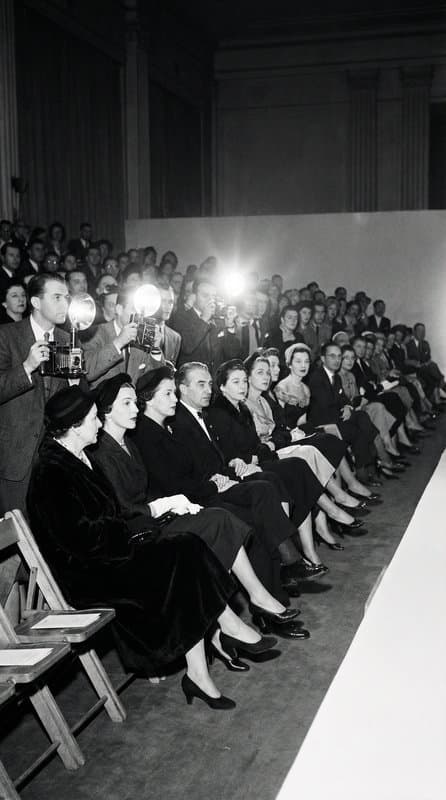
Our current pipeline pulls from over 200 sources spanning runway photography (every major show, every season), social platforms (engagement-weighted, not raw volume), street-style coverage (geo-tagged for regional patterns), retail e-commerce (price tier, sell-through proxies), and resale markets (stockX-style platforms for hold-value signal). Then a fashion-tuned reasoning model cross-references the streams to surface patterns where multiple signals converge.
The patterns that show up across four or five streams simultaneously are the real trends. The patterns that show up on one stream and not the others are noise. AI fashion tools that don't do this cross-validation produce a lot of plausible-looking false positives.
The temporal honesty test
Here's a test for any fashion trend analysis AI tool you're evaluating: ask it to show you what its forecasts looked like 12 months ago, side-by-side with what actually happened.
Tools with real predictive power can do this. Tools that are dashboards-of-current-state can't, because their "forecasts" weren't predictions; they were descriptions of present reality.
The honest forecasters get a fair number of calls wrong. That's expected — fashion is a high-noise system. What separates them from the dashboards is calibration: when they say 70% confidence, they're right 70% of the time, not 50% or 95%. Calibration over time is the hard thing. It's also the only thing that matters for AI in fashion industry use cases.
What forecasting can and can't do
What AI fashion trend forecasting does well, in our experience:
- Surface emerging silhouettes and material signals 4-9 months ahead of mainstream retail
- Identify regional break-out patterns (a trend forming in Seoul before it travels)
- Flag color and pattern signals with confidence ranges
- Detect declining trends (often more useful than emerging ones — stops you over-buying)
What it can't do:
- Predict cultural inflection points. The "quiet luxury" wave wasn't predictable from runway data. It was a cultural reaction to vibes and macro signals.
- Forecast micro-aesthetic movements that emerge primarily on niche social platforms before they hit any mainstream signal.
- Replace the human strategist's read on whether a trend will resonate with your specific customer. AI fashion tools see the pattern; they don't see your customer.
The forecasters who oversell on these points are the ones who lose credibility. The honest ones are clear about boundaries.
What this means for buyers and merchandisers
If you're evaluating AI fashion trend forecasting tools, the questions worth asking aren't how pretty is the dashboard. They're:
- How many independent source streams feed the model? Fewer than three is decoration.
- Can you show me your historical accuracy by trend type and time horizon?
- What's the model's calibration when it says 70% confidence?
- Are confidence intervals shown by default, or hidden behind asterisks?
- Can you export the underlying signal data, or only the visualisation?
The tools that answer these questions cleanly are the ones building real fashion trend analysis AI. The ones that deflect are selling something else.
We'd rather lose a sales conversation by giving an honest answer than win one with a demo. AI fashion trend forecasting earned its credibility one calibrated call at a time. That's the only way it ever will.
For a worked example of what calibrated forecasting looks like in practice, read our SS26 Fashion Week Intelligence report — confidence levels per signal, honest "what we missed" notes, commercial vs editorial calls separated. Or try McLeuker AI on your own brief. Follow McLeuker Research on LinkedIn and X.
Series · AI Fashion Research Fundamentals
1 of 4